
Planting Trees for Urban Health
On the Issue of Urban Tree Planting
As cities develop, the installation of too many underground utility lines and facilities has led to a shortage of space for tree pits.
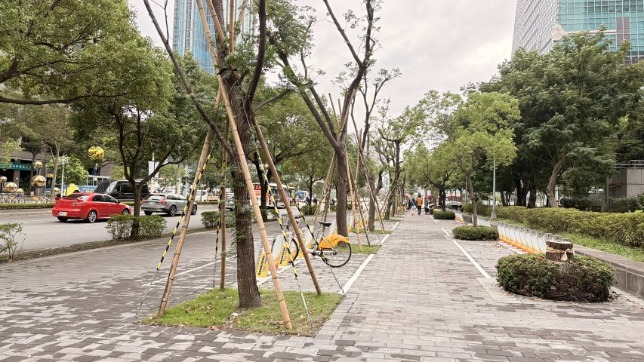
Due to repeated heavy traffic from pedestrians and vehicles over a long period of time, the soil becomes compacted, preventing air and water from penetrating, which hinders the tree roots' ability to absorb nutrients.
In order to survive, tree roots need to absorb more oxygen and rainwater, so they are forced to grow upward, breaking through the pavement.
Tree roots that grow above ground not only damage the road surface but also increase the risk of the tree falling.
The most fundamental solution
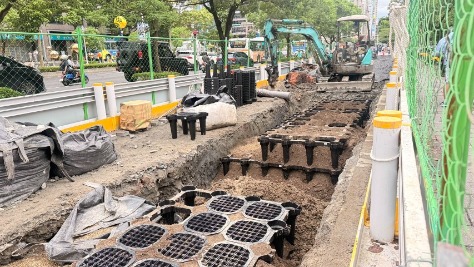
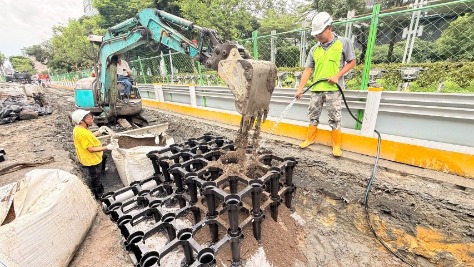
Expanding the tree pit using a hexagonal structural cell is like building a reinforced concrete structure for the tree roots, ensuring they have more room to grow. Even with heavy vehicle traffic on the surface, the soil within the tree pit remains undisturbed, allowing the roots to take firm hold and grow healthily.
Hexagonal Structural Cell Product Features
The Hexagonal Structural Cell is made of high-pressure-resistant polypropylene and offers excellent compressive strength. Composed of numerous small units, it is quick and easy to install.
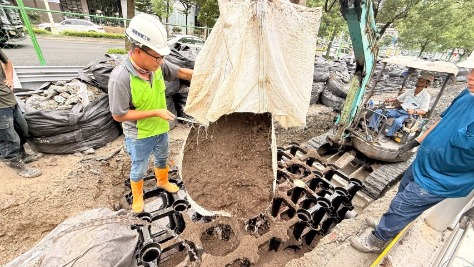
Supported by the Hexagonal Structural Cell, the soil in the tree pit is not compacted and retains sufficient air and moisture for the roots to absorb.
Enlarge the planting hole to provide more room for the roots to spread, helping the tree establish a firm root system.
Results of the improvements
Upon completion of the Hexagonal Structural Cell installation, backfill with nutrient-rich soil, water thoroughly, and then restore the permeable pavement to allow for pedestrian and vehicular traffic.
During sudden heavy downpours, rainwater flows through the permeable pavement and seeps into the soil, allowing tree roots to absorb ample water.
Excess rainwater can also seep back into the ground, promoting the water cycle and reducing the burden on urban drainage systems. This is also the best way to plant trees in a healthy urban environment.